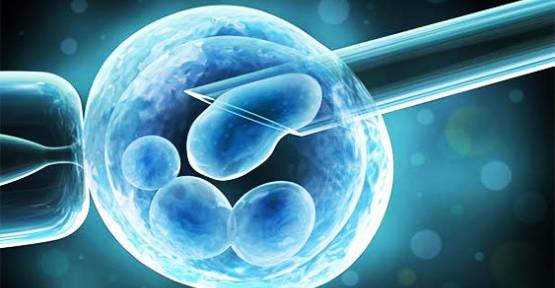
ICSI – Intracytoplasmic Sperm Injection
Intracytoplasmic Sperm Injection (ICSI) is the most advanced fertilization technique used in IVF. Since the first clinical application in 1992 it has produced millions of babies worldwide and has largely replaced conventional insemination in male-factor cases. At Doğuş IVF Center we choose ICSI by default whenever sperm parameters are reduced, fertilization has previously failed, or genetic testing is planned for the embryos.
ICSI vs Conventional IVF
In conventional IVF every egg is incubated with 50,000–100,000 prepared sperm and fertilization happens spontaneously. In ICSI the embryologist selects a single, motile, morphologically normal sperm under a high-magnification microscope and injects it directly into the egg using an ultra-fine glass pipette. This bypasses the natural barrier the sperm needs to penetrate, eliminating fertilization failure caused by impaired sperm function.
Who Is ICSI For?
ICSI is the first-line option in severe male-factor infertility: low sperm count (oligozoospermia), low motility (asthenozoospermia), abnormal morphology (teratozoospermia), or failure of the sperm to penetrate the egg. Surgical sperm retrievals such as TESA/TESE provide very few sperm, which makes ICSI the only feasible fertilization method. ICSI is also standard whenever previous IVF cycles had a fertilization problem, when frozen sperm is used or when embryos will undergo preimplantation genetic testing (PGT).
How ICSI Is Performed
Outside of the laboratory step, ICSI follows the same protocol as conventional IVF: ovaries are stimulated, eggs are retrieved by OPU and a sperm sample is prepared the same day. The embryologist selects one sperm per mature egg, immobilizes it and injects it into the cytoplasm with sub-millimetre precision. Fertilization rates of 70–80% are typical, and the resulting embryos are cultured for 3–5 days before transfer.
Health of Babies Born after ICSI
Long-term follow-up studies show that the rate of congenital anomalies in ICSI babies is comparable to natural conception. Increased risk only applies to severe male infertility caused by genetic conditions (CFTR mutations, balanced translocations). In such cases we recommend genetic counseling and, when indicated, PGT to ensure healthy offspring.
ICSI Success Rates
At Doğuş IVF Center fertilization rates with ICSI range between 75–85%. Clinical pregnancy rates exceed 70% in women under 35; egg donation may be recommended for women over 40. As long as a single live, motile sperm can be obtained—even from a testicular biopsy—ICSI can be performed.
Treatment Steps
- 1Sperm Collection
- 2Sperm Selection
- 3Egg Retrieval
- 4Microinjection
- 5Embryo Culture
- 6Embryo Transfer
Who Is It For?
- Low sperm count (oligozoospermia)
- Reduced sperm motility (asthenozoospermia)
- Abnormal sperm morphology (teratozoospermia)
- Men with azoospermia after TESA/TESE
- Couples with previous fertilization failure
- Cycles using frozen sperm
- Embryos planned for PGT
Frequently Asked Questions
Are ICSI and IVF the same thing?
No. ICSI is a fertilization technique used inside an IVF cycle. In classic IVF the sperm fertilizes the egg by itself; in ICSI a single sperm is injected into the egg by the embryologist.
Is ICSI more expensive?
It costs slightly more than conventional IVF because of the additional laboratory step, but ICSI is included by default in Doğuş IVF Center packages.
Can ICSI be performed if there is no sperm in the ejaculate?
Yes. In azoospermia, sperm is retrieved surgically from the testicles via TESA/TESE and used for ICSI.
Are anomaly rates higher in ICSI babies?
They are comparable to natural conception. Increased risk applies only when male infertility has a genetic origin; genetic counseling is offered in those cases.