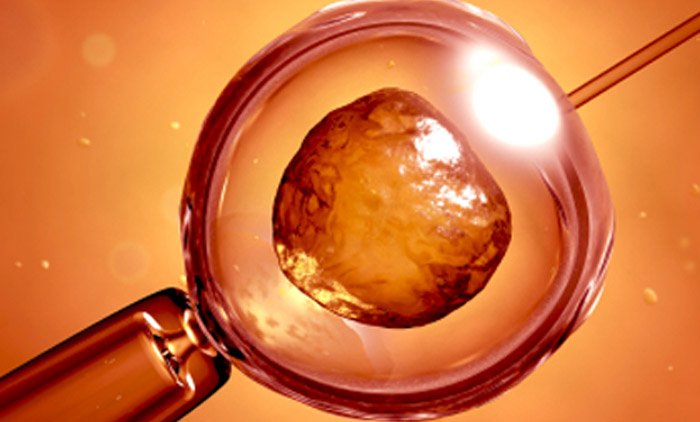
Egg Donation
When a couple cannot conceive because the intended mother is unable to use her own eggs, oocytes from a healthy young donor are fertilized with the partner’s sperm in the laboratory and the resulting embryos are transferred to the recipient’s uterus. Thanks to the favourable legal framework in Northern Cyprus, Doğuş IVF Center offers egg donation to international patients with high pregnancy rates.
Who Is Egg Donation For?
Egg donation is offered to women with premature ovarian failure or early menopause, women born without ovaries or who lost them surgically, those with depleted ovarian reserve after chemotherapy or radiotherapy, women aged 40+ with very low egg count and quality, couples with repeated IVF failure, women with recurrent miscarriage and women carrying inherited genetic disorders. With the right indication, pregnancy rates exceed 70%.
Donor Selection and Matching
Donors at Doğuş IVF Center are 21–29 years old, physically and psychologically healthy, with proven fertility. All donors undergo karyotype analysis, genetic carrier screening (thalassemia, cystic fibrosis, SMA), infectious-disease tests (HIV, HBV, HCV, syphilis, CMV) and hormone evaluation. We perform phenotypic matching based on hair color, eye color, complexion, height and blood group; finding a compatible donor for Rh-negative recipients is a priority.
How the Cycle Works
The cycle has four stages. (1) Donor stimulation: hormonal injections start on day 2–3 of menstruation and continue for 10–12 days. (2) Recipient preparation: estrogen therapy thickens the endometrium. (3) Egg retrieval and ICSI: on retrieval day the partner provides a fresh sperm sample and the eggs are fertilized by ICSI. (4) Embryo transfer on day 3 or day 5, with a beta-hCG test 12 days later. The recipient couple typically needs only 5–7 days in Cyprus.
Legal and Ethical Framework
Egg donation in Northern Cyprus is fully anonymous. Donors and recipients never know each other. Children born from donation are the legal children of the recipient couple, and medical records are kept confidential under an ethics-board protocol.
Treatment Steps
- 1Donor Selection
- 2Donor Stimulation
- 3Recipient Endometrial Prep
- 4Donor Egg Retrieval
- 5ICSI Fertilization
- 6Embryo Transfer
- 7Pregnancy Test
Who Is It For?
- Women with premature menopause
- Women whose ovaries were surgically removed
- Women with depleted ovarian reserve after cancer treatment
- Women 40+ with low ovarian reserve
- Couples with repeated IVF failure
- Recurrent miscarriage
- Women carrying inherited genetic disorders
Frequently Asked Questions
What is the pregnancy rate with egg donation?
The recipient’s age is not the limiting factor; the donor’s age and embryo quality are. At Doğuş IVF Center clinical pregnancy rates exceed 70%.
Do I choose the donor?
Donation is anonymous by law, but the donor’s physical traits (hair, eye and skin color, height, blood type) are matched to yours. Additional non-identifying information such as education and hobbies can be shared on request.
Whose child is it legally?
The baby is the legal child of the recipient couple. The donor has no rights or obligations.
How long do we stay in Cyprus?
5–7 days are typically enough for the embryo transfer. The donor’s stimulation is supervised by our team in parallel.
Will the baby look like the donor?
Yes, the baby is genetically related to the donor. This is why we focus on phenotypic matching; most babies share appearance traits with the recipient couple.