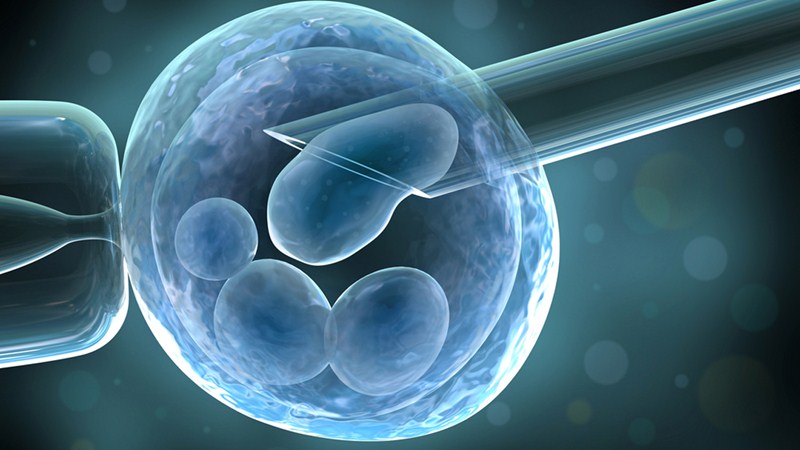
Laser-Assisted Hatching
On day 5 of culture the blastocyst must break out of its outer shell (the zona pellucida) before implantation—a process called hatching. When the embryo cannot do this on its own, pregnancy does not occur. In laser-assisted hatching the embryologist uses a diode laser mounted on a high-resolution microscope to thin or open a tiny part of the zona, never touching the embryo itself. This delicate, non-contact step improves implantation in patients with advanced maternal age, frozen embryo transfers and previous IVF failures.
Who Benefits Most?
Patients aged 37 and above, couples with prior implantation failure, planned frozen embryo transfers (freezing can harden the zona), embryos with a visibly thick zona, and embryos biopsied for PGT-A all benefit from laser hatching.
How the Procedure Is Performed
Just before transfer, the embryologist places the embryo on a heated microscope stage. A laser system mounted on the microscope delivers microsecond pulses to a region of the zona pellucida far from the inner cell mass that will form the baby, thinning it by tens of microns or creating a small opening. The whole step takes 2–3 minutes and the embryo is transferred immediately afterwards.
Is It Safe?
Modern laser hatching is far safer than the older acidic or mechanical methods because there is no contact with the embryo, heat transfer is minimal and pulse duration is in microseconds. Clinical studies in Austria, Italy and the United States showed no meaningful increase in monozygotic twinning and no negative effect on embryo development.
Impact on Success
When indications are appropriate, laser hatching adds 5–10% to implantation success. It is not necessary in young patients with normal zona thickness. At Doğuş IVF Center we use it selectively, especially with advanced age and frozen embryo transfers.
Treatment Steps
- 1Embryo Evaluation
- 2Laser Thinning/Opening
- 3Embryo Transfer
Who Is It For?
- Maternal age 37+
- Embryos with thick zona
- Frozen embryo transfer (FET)
- Prior implantation failures
- PGT-A biopsied embryos
Frequently Asked Questions
Is it done on every patient?
No. We apply it only when indicated (older age, thick zona, FET, previous failure).
Does it raise the monozygotic twin rate?
Large studies have not shown a clinically significant increase.
Does it harm the embryo?
Modern diode-laser hatching does not harm embryo development.
Is there an extra fee?
At Doğuş IVF Center it is included with no extra charge when indicated.